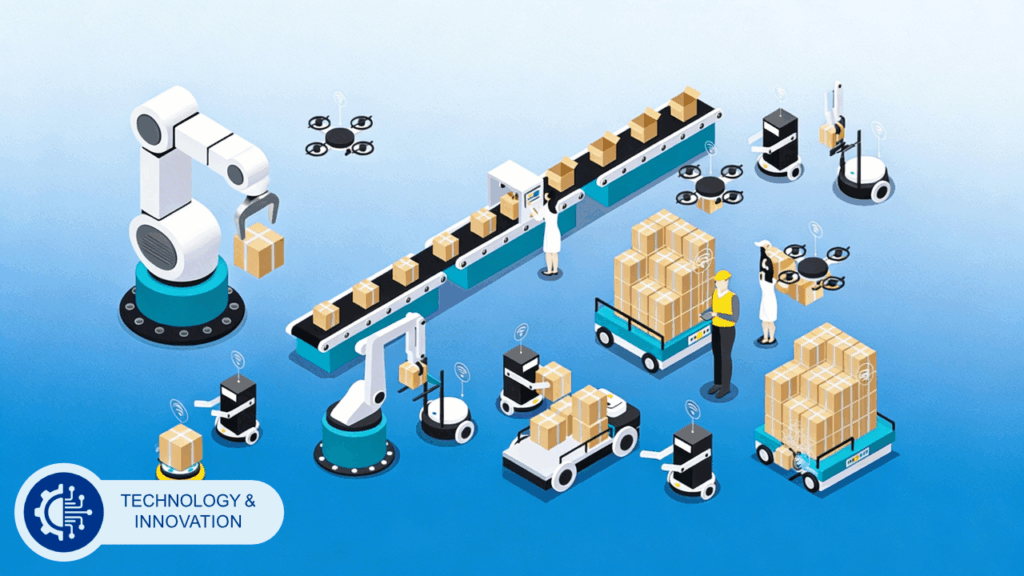
Logistics and Supply Chain Management Plays a Vital role in today’s economy as it ensures the smooth flow of goods and services from producers to consumers by facilitating the movement of goods from each stage of creation to shipment. The RPA in Logistics and Supply Chain management helps in enhancing efficiency and reducing errors.
Robotic Process Automation-RPA has a substantial impact on logistics and supply chain management by automating complex repetitive tasks and functionality to optimize the entire process and cut operational costs. RPA increases overall operational effectiveness while enabling firms to concentrate on more strategic endeavors by automating repetitive operations like order processing, shipment scheduling, and customer support.

RPA is revolutionizing logistics and supply chain management in the following ways:
1. Inventory Management
- Automated Stock Monitoring: RPA has the ability to automatically reorder items, create alerts for low stock, and track stock levels in real time. This enhances inventory turnover by preventing stockouts and overstocking.
- Inventory Audits: By automatically balancing digital records with actual goods, robots can increase accuracy and decrease the need for manual inventory inspections.
2. Order Processing
- Automated Order Entry: Without the need for human interaction, RPA may process order entries via a variety of channels, including emails, websites, and ERP systems, by gathering pertinent data, processing it and updating the systems.
- Data Validation: To make sure that only legitimate orders are completed, RPA can validate order details including delivery addresses, product availability, and payment confirmations.
3. Shipping and Distribution
- Route Optimization: By analyzing traffic patterns, weather, and delivery schedules, RPA may interface with logistics systems to optimize delivery routes for both time and cost effectiveness.
- Shipping Documentation: RPA can reduce paperwork and administrative strain by automatically generating shipping labels, invoices, customs forms, and other necessary documentation.
4. Supply Chain Analytics and Reporting
- Data Extraction: By extracting pertinent data from various systems (such as ERP, CRM, and SCM platforms) and combining it for analysis, RPA bots can cut down on the amount of time needed for manual data collection.
- Reports Automation: RPA can produce regular reports on supplier performance, sales, and stock levels, saving time in creating reports and enabling them to make well-informed decisions.
5. Compliance and Documentation
- Regulatory Compliance: RPA may assist guarantee that all logistics and supply chain operations adhere to local, national, and international rules by automatically creating and submitting necessary paperwork.
- Auditing and traceability: RPA can ensure that every transaction or process is logged and traceable, which aids audits and helps businesses satisfy compliance standards.
6. Integration with IoT and AI
- IoT Integration: RPA may work with IoT devices to automate operations such as monitoring the temperature of sensitive commodities or tracking the condition of shipments in transit.
- AI Integration: With AI, RPA can evaluate previous data and predict trends, allowing for proactive decisions on stock levels, demand forecasting, and supply chain disruptions.
7. Risk and Crisis Management
- Handling Disruptions: RPA can be configured to automatically warn teams in the event of disruptions (e.g., delays, damaged items), allowing for faster decision-making during crises.
- Supply Chain Visibility: By integrating RPA with supply chain management systems, businesses can acquire a better understanding of possible hazards, bottlenecks, and inefficiencies, allowing them to be addressed more rapidly.
8. Customer Service
- Tracking Information: RPA bots can be used to give customers real-time order status updates, such as delivery times, product availability, and changes in shipment status.
- Returns and Refunds: RPA can streamline the returns process by automatically generating return labels, processing refunds, and updating inventory in real time.

Challenges of Implementing RPA
- Integration with Legacy Systems: Certain older systems may be incompatible with RPA technology, necessitating further adaptation.
- Change Management: Employees may be resistant to automation because they are afraid of losing their jobs or having their work processes changed.
- Security Concerns: Automation systems must be securely guarded to avoid cyber threats, particularly when sensitive data is processed.
Future of RPA in logistics and supply chain Management
- Enhanced Efficiency: RPA automates repetitive operations such as order processing, invoicing, inventory management, and tracking, decreasing manual labor and boosting speed.
- Real-time Data Processing: Automation will speed up data collecting and analysis, allowing for better decision-making in inventory management, demand forecasting, and delivery scheduling.
- Scalability and Flexibility: As supply chains expand, RPA will make it easier to scale processes, allowing organizations to respond swiftly to changes in demand, shipping quantities, or market conditions.
- End-to-End Automation: RPA will expand to encompass the entire supply chain process, from procurement to last-mile delivery, automating not just back-office but also front-end activities.
- Sustainability: RPA can help to create greener, more sustainable supply chains by increasing resource efficiency and minimizing waste (for example, overstocking or transportation delays).
Conclusion
RPA in logistics and supply chain management revolves around hyper-automation, in which RPA is combined with advanced technologies such as AI, IoT, and machine learning to create intelligent, linked systems that can be very useful in future as well. RPA automates routine operations and also plays an important role in improving decision-making, customer experiences, and overall operational efficiency throughout
the supply chain. As logistics firms adopt automation, those that effectively use RPA will be better positioned to deal with difficulties. interruptions, rising prices, and growing consumer demands for speed and personalization.