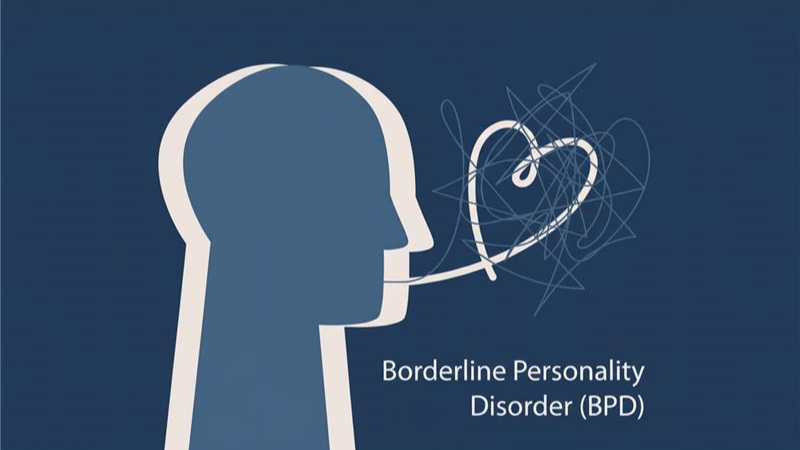
BPD is a mental health condition marked by extreme mood fluctuations, incapability in forming and maintaining interpersonal relationships, and chronic impulsivity. It is also called Emotionally Unstable Personality Disorder because of the related inability for emotional regulation. Most people who experience symptoms do so from a very young age and often go undiagnosed well into their adulthood. Symptoms can persist for years and may affect both men and women. Individuals with these traits often show a fear of abandonment.
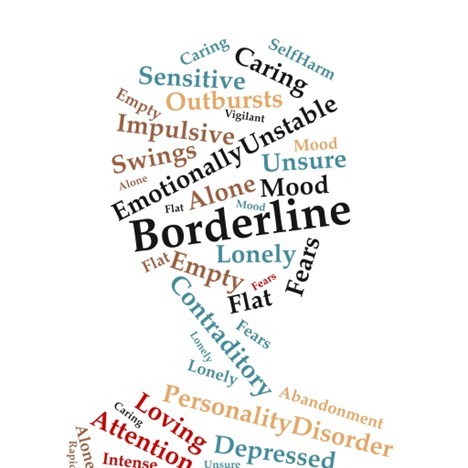
It is very common for a student to have moments of doubt about their academic path or for a professional to doubt their career path. This may even call into question some form of dissonance between one’s internal self and what they are doing with life. In moderate amounts, such introspection is healthy for self-improvement, but for someone with borderline personality disorder, this dissonance goes well beyond a tug-of-war between wants and needs and handicaps their ability to have a normal life. We know that each individual has physical boundaries that define where they begin and end, ie the limits of their body. Similarly, emotions too have boundaries, mental ones. Unlike physical boundaries, mental boundaries are not as clear or distinct. Where they start, where they end, who crosses them, and where they are violated, all influence the smooth flow of our life.
Let’s take a deeper look at these symptoms:
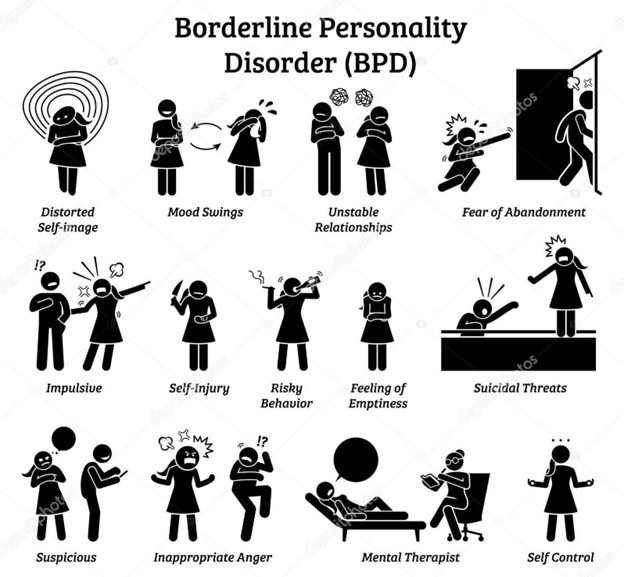
- Persistent emptiness – We feel bored. Quite often, too. But it is very rare to experience profound emptiness even in the middle of a busy crowd. This is the constant inner void experienced by those with Borderline Personality Disorder (BPD). No matter how deeply they surround themselves with enjoyable activities, they feel that everything is meaningless, and that those around them are insincere, and that they are ultimately alone in the crowd.
- Unstable emotions – Their emotions shift drastically within moments. Sudden happiness, unexplained sadness in the next moment, feelings of pity or hatred. Every human emotion manifest in individuals with BPD within hours. This is not an act but a natural behavioral pattern. They experience emotions with extreme intensity, leading to overreactions and even minor triggers.
- Fear of abandonment – This fear almost always arises without any real cause, often stemming from misconstrued perception alone. This happens because the minds of those with BPD are wired to be hypervigilant, constantly monitoring others’ behavior, words, and actions for signs of potential abandonment or isolation. Even something as trivial as the absence of a smile from their favourite person can fuel this fear
- Unstable self-identity – Self-identity is shaped by personal perspectives and influenced by one’s environment. Humans mostly develop a stable sense of self by identifying our foundational traits. But individuals with BPD find it difficult to define who they are, and their self-perception alternates constantly. The beliefs, values, or passions that excite them today may not matter tomorrow. Answering “Who am I?” Through personal interests or preferences is easy for most, but not for those with BPD. To some extent, they mimic the behavior of those they admire to fit into groups.
- Impulsive behaviors – Individuals with BPD often engage in reckless actions—excessive spending, dangerous driving, overeating, substance abuse, or unhealthy sexual relationships—without reason. These impulsive decisions stem from chronic emptiness. Controlling such behavior is agonizing, as they lack self-awareness about when or why these actions occur.
- Unstable relationships – They form relationships quickly and intensely. They may idealize someone as perfect one moment and demonize them over minor issues the next, a phenomenon called “splitting.” Even public figures or loved ones can become subjects of such volatile admiration. Their “favorite person” (a friend, partner, relative, or mentor) becomes central to their existence. The terror of losing this person leads to extreme behaviors that destabilize the relationship. Fear of abandonment often drives them to sabotage or sever connections preemptively.
When it comes to men, there has long been a belief that men are less likely to have BPD than women. But studies show that this is not true. Let’s consider a man with the characteristic symptoms of BPD: he is quick-tempered, an alcoholic, has mood swings, lacks consistency in his actions, constantly pressures his partner, and is a spendthrift – doesn’t this describe the average man around us? No one would suspect there is something wrong with him until his inner conflicts push him to the brink of suicide or violence. Inside that spendthrift man who acts out so recklessly, there are fears, pain, a constant emptiness, and emotions he cannot endure or control. These feelings eat away from him from within. It is an injustice to trivialize his symptoms as mere masculine traits, dismissing the gravity of his suffering.
There can be two types of BPD, one is common and the other is quiet BPD.
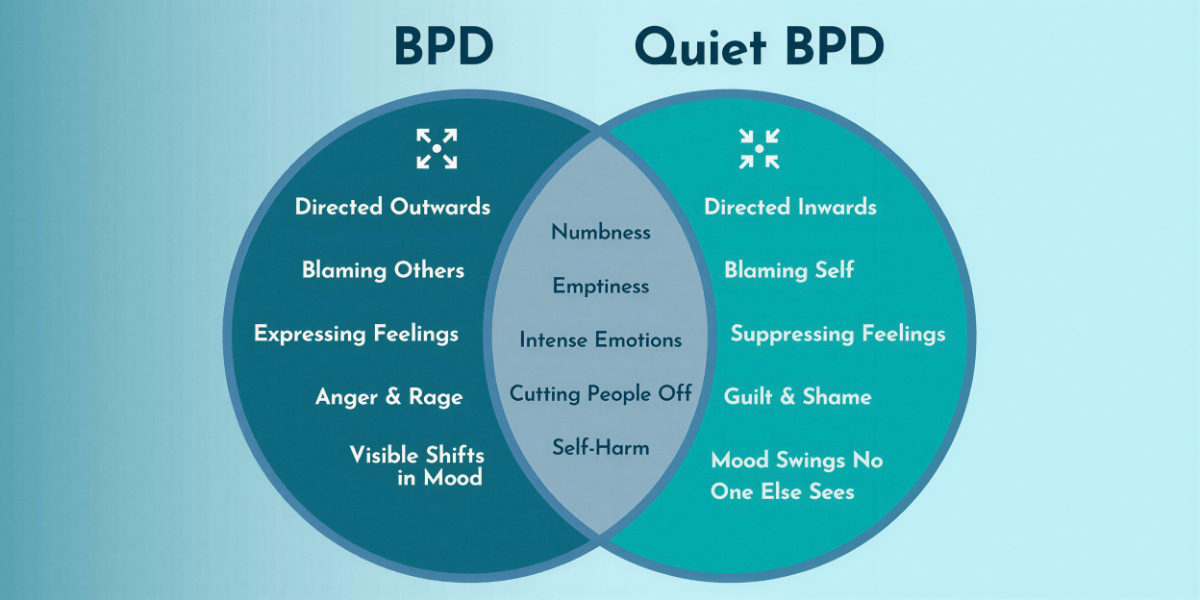
Borderline Personality Disorder in our society is hidden within the rigid standards of how a woman should behave and how a man should behave. Unable to define themselves, they exist silently in this society, facing perpetual emptiness and the terror of isolation. The dangers awaiting children who fail to establish physical and mental boundaries early in life are numerous. As adults, divorce or suicide attempts often become the crises that finally drive them to seek medical help. Otherwise, they end up being trapped in unhealthy mindsets and lives. This is not acceptable. This is not enough.
Everyone deserves a peaceful life rooted in self-control and self-definition – and if treatment is necessary to achieve this, then so be it. Whether you recognize these symptoms in yourself or someone you know, seeking treatment for BPD is essential. Since symptoms can emerge early in life, the sooner help is sought, the better. None of us benefit from society turning a blind eye to mental disorders; we only stand to lose. We must prioritize treatment, ensure safety, and fulfill every responsibility a healthy society owes its people.