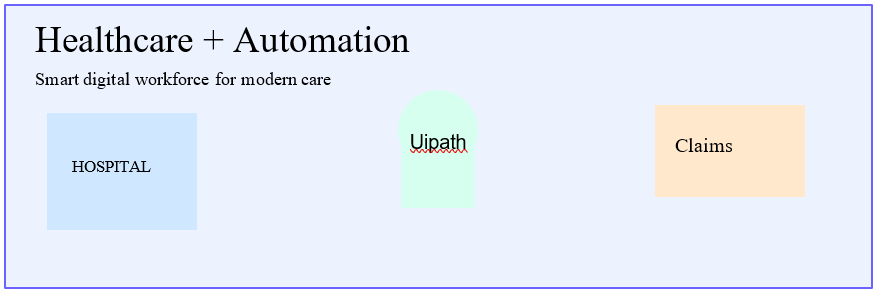
Healthcare organizations face rising administrative workloads. UiPath-powered Robotic Process Automation (RPA) helps streamline repetitive operations, improve accuracy, and free staff to focus on patient outcomes.
1. Patient Onboarding
Automates registration, ID verification, insurance checks, and appointment confirmations.
2. Claims & Billing
Processes invoices, validates payer data, and manages claim status updates.
3. Records Management
Moves data across EHR, lab, pharmacy, and finance systems securely.
4. Faster Turnaround
24/7 bots reduce queues and improve service response times.

Additional High-Value Use Cases
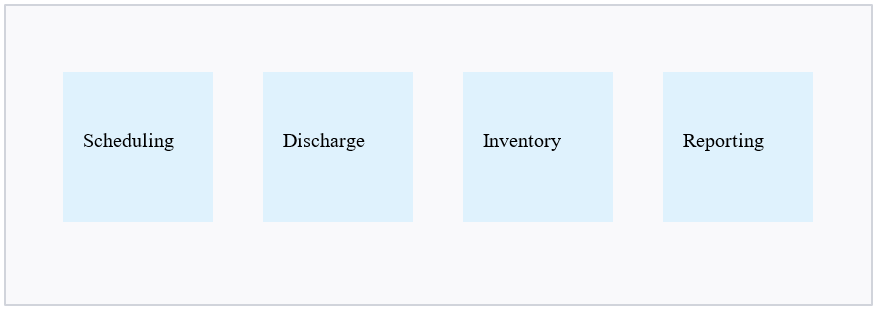
5. Smart Appointment Scheduling
Bots coordinate calendars, reminders, cancellations, and rescheduling.
6. Discharge Documentation
Automates summary creation and patient handover workflows.
7. Inventory Support
Tracks stock levels for medicines and supplies using integrated systems.
8. Regulatory Reporting
Prepares recurring compliance submissions with full audit trails.

Why UiPath for Healthcare?
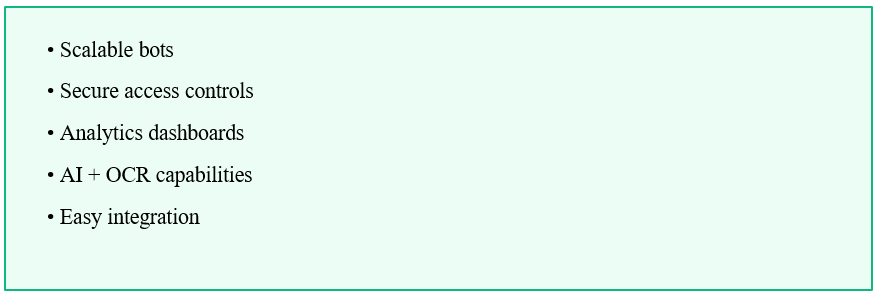
UiPath combines attended and unattended automation, document understanding, OCR, analytics, and orchestration capabilities—making it highly suitable for complex healthcare operations.
Business Impact
- Lower operating costs
- Better patient experience
- Improved compliance posture
- Faster staff productivity gains
- Consistent service quality
Conclusion
Healthcare leaders adopting UiPath RPA can transform administrative departments into agile, data-driven support functions that enable better care delivery.